


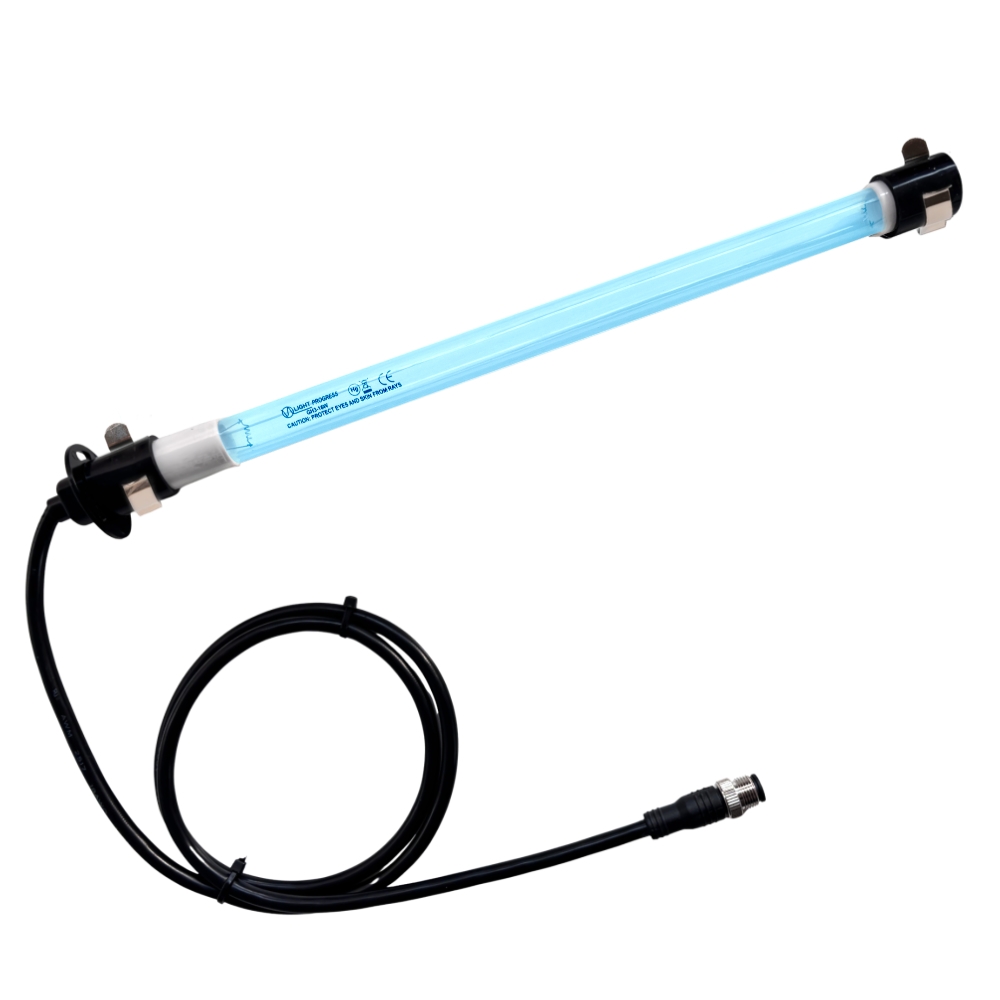
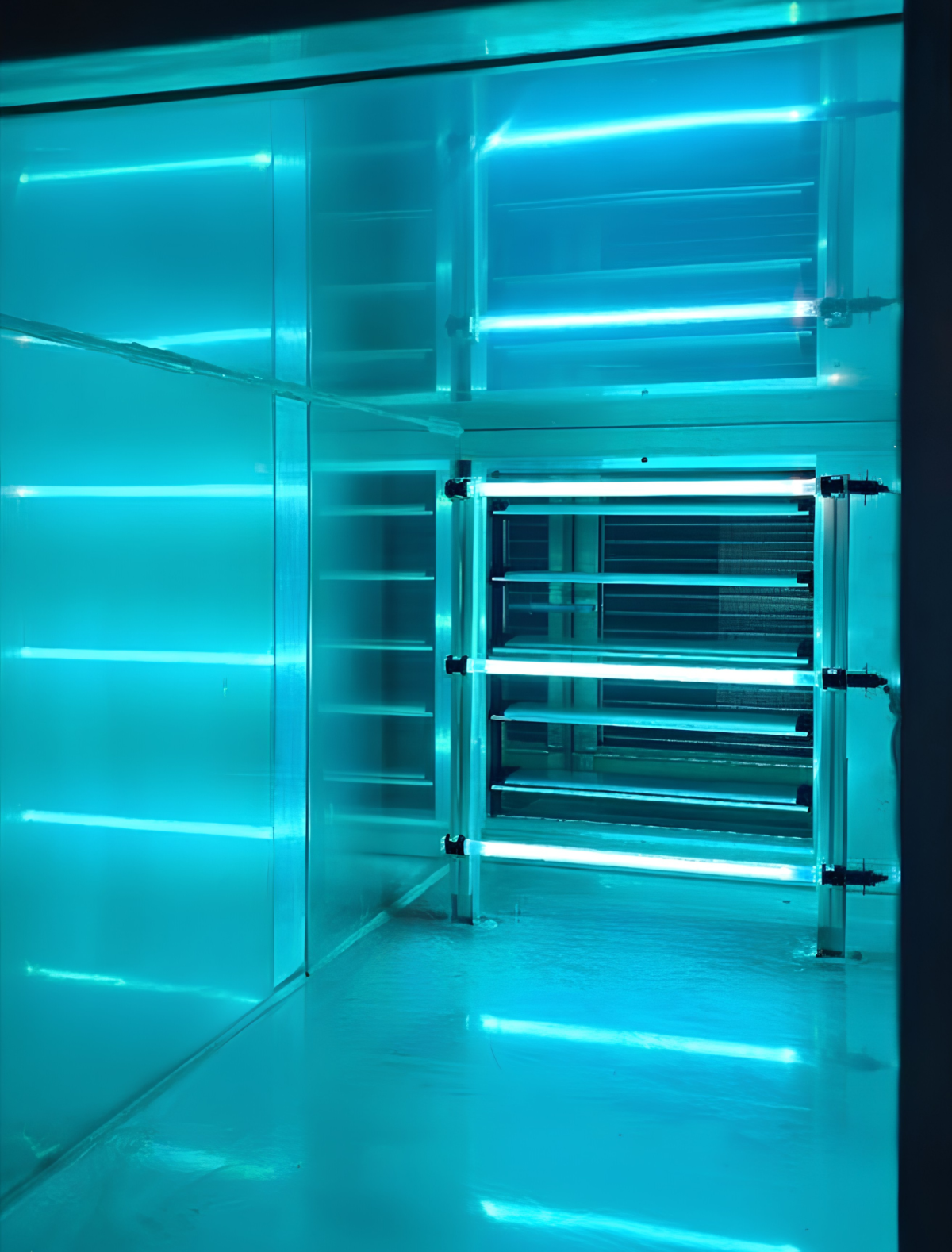
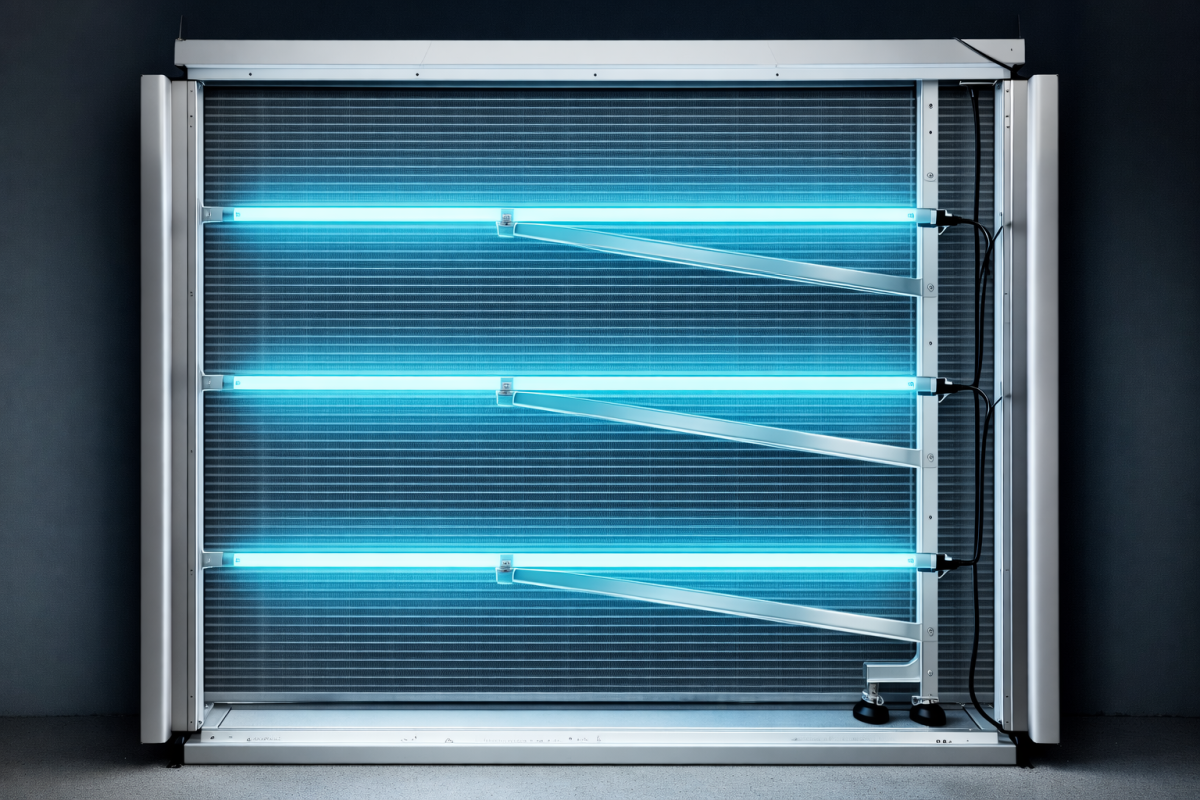
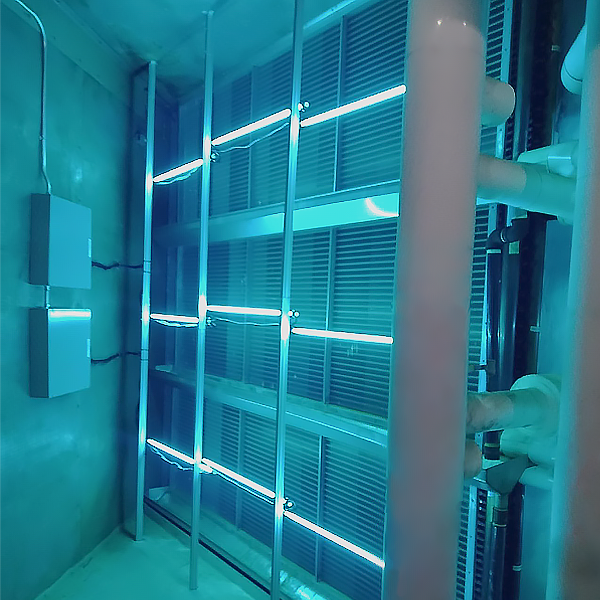
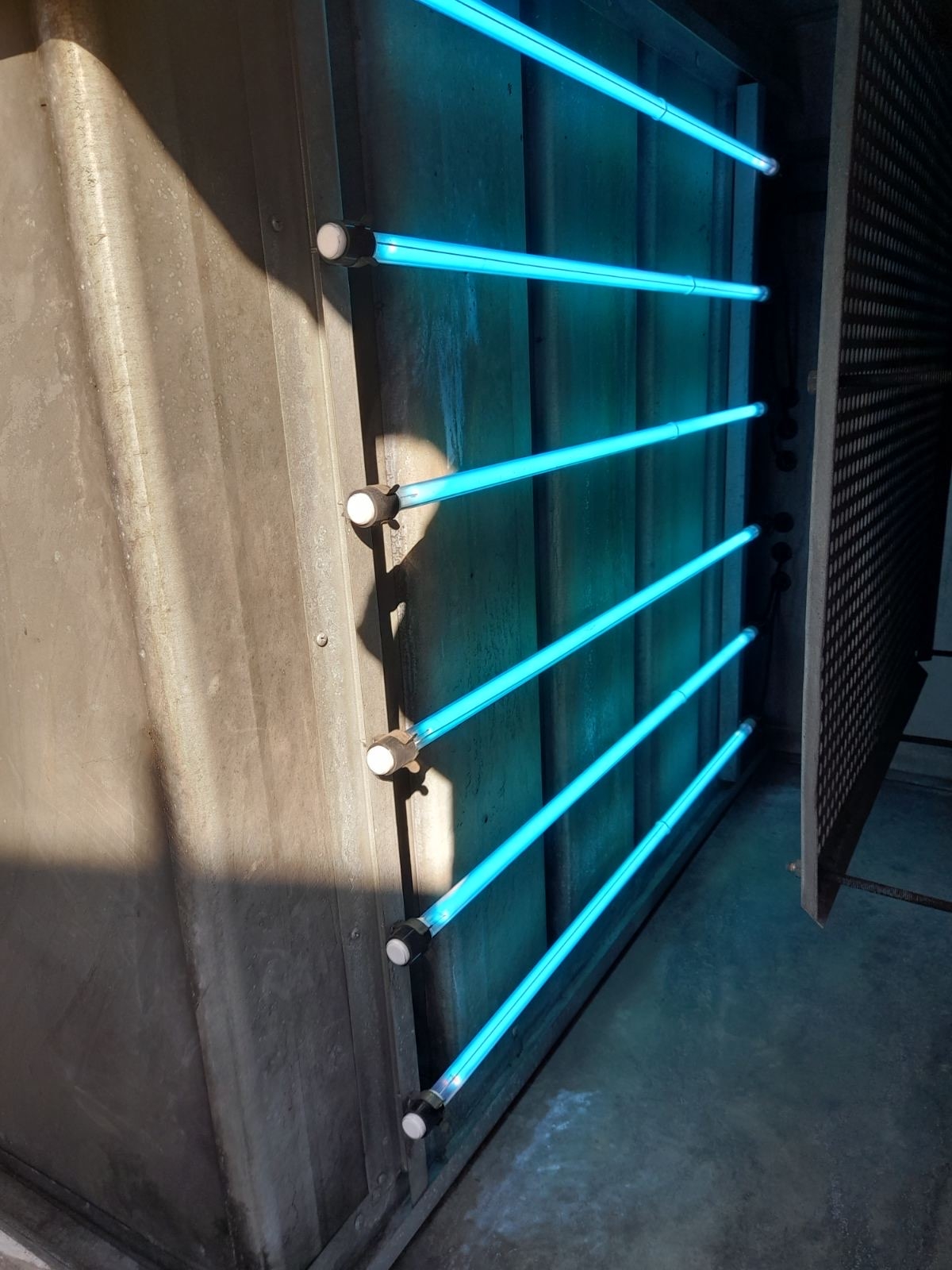
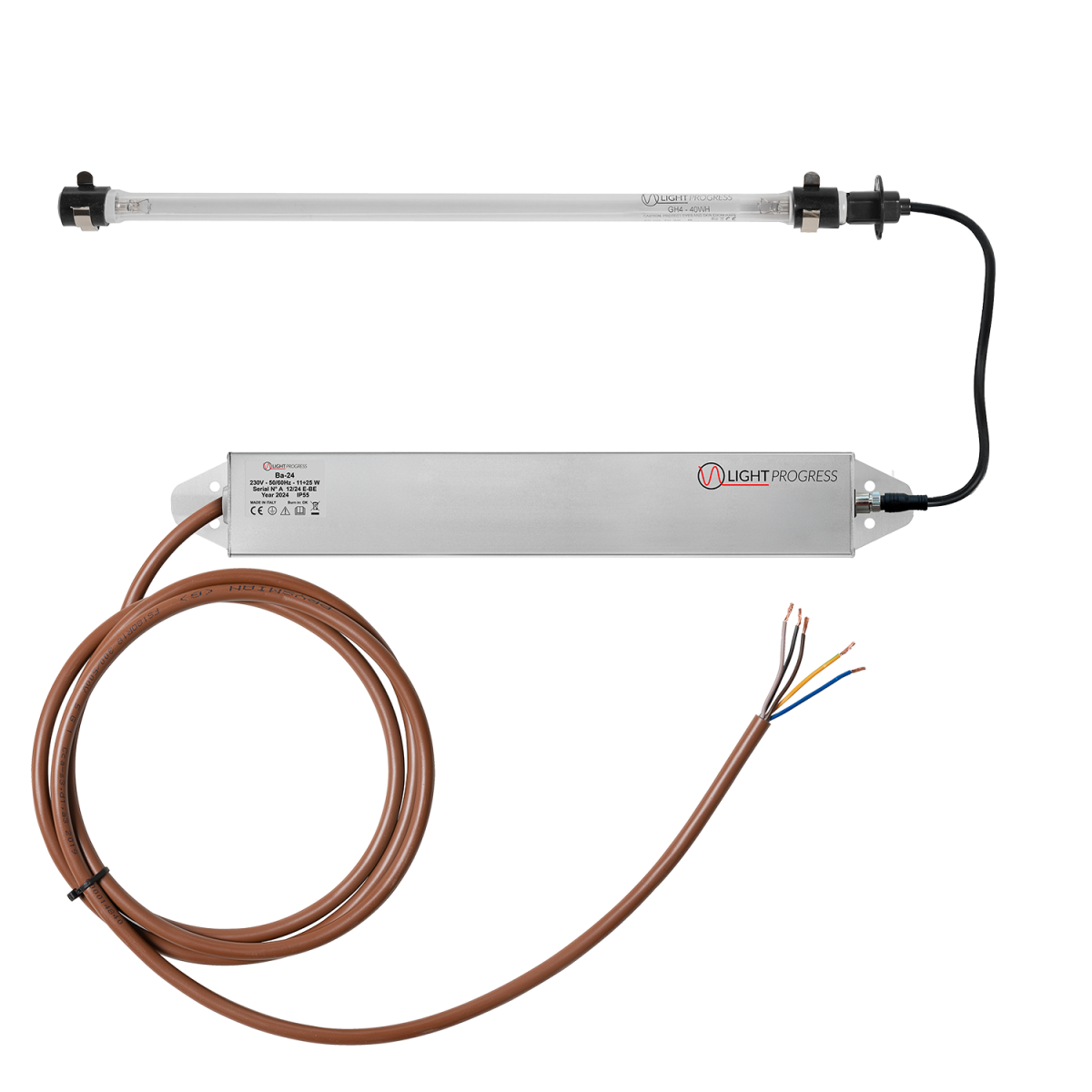
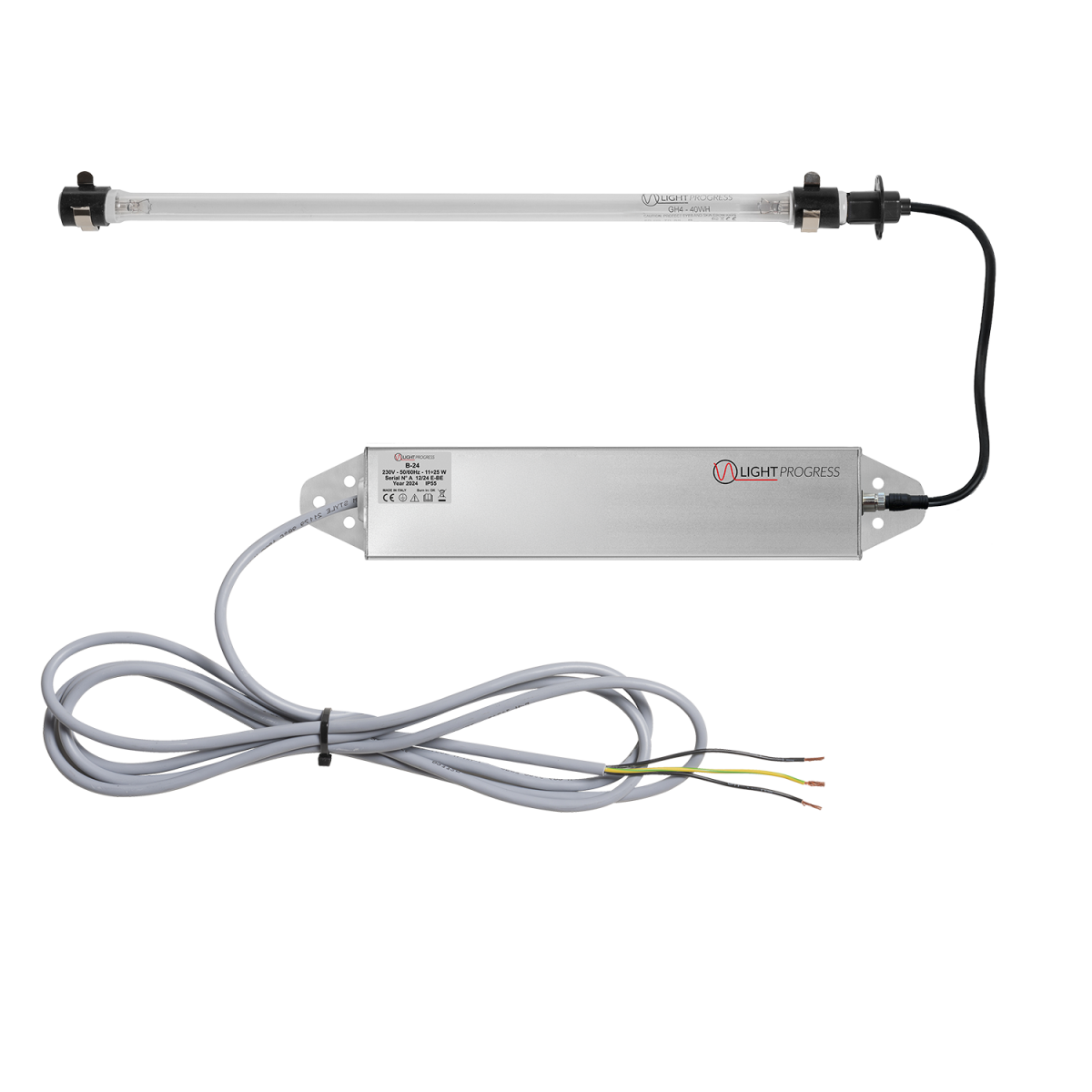
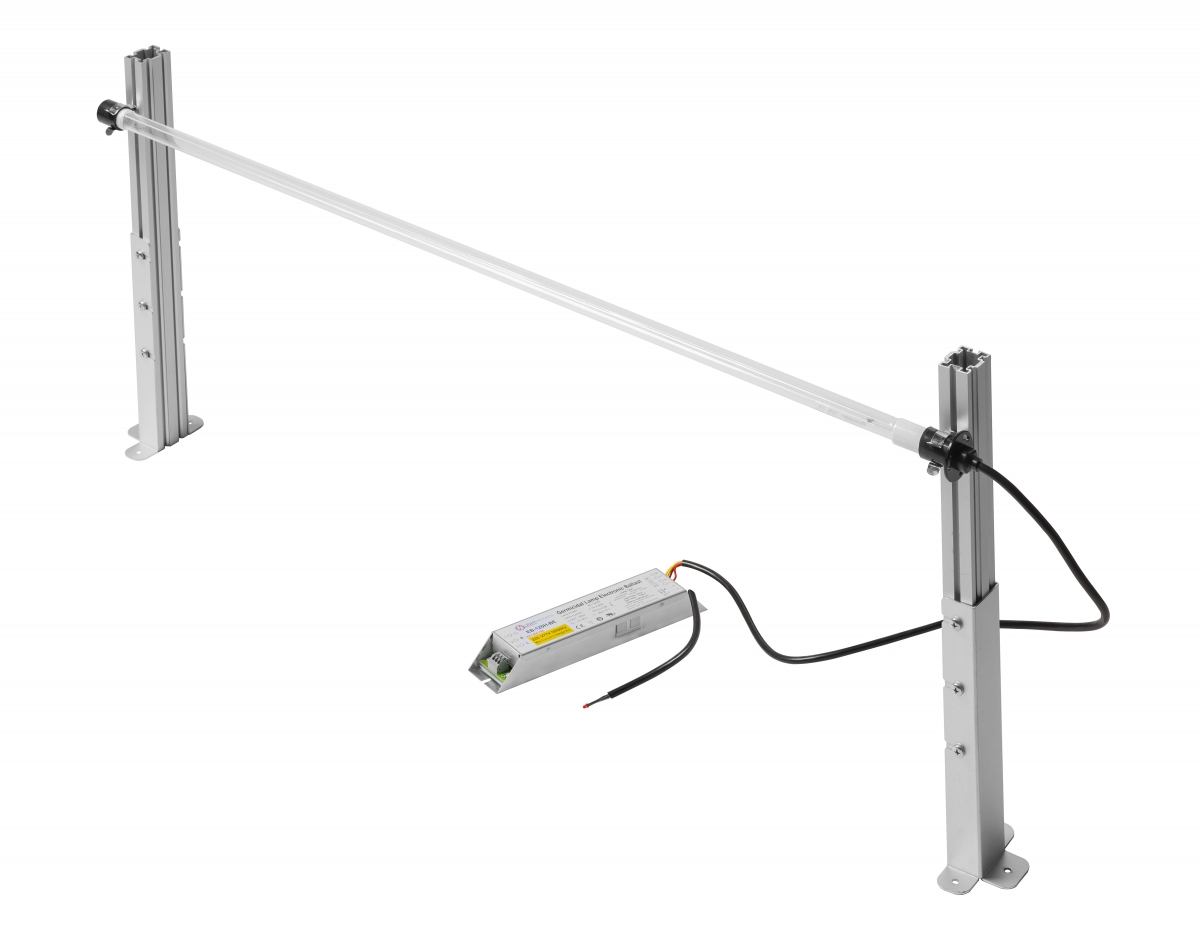
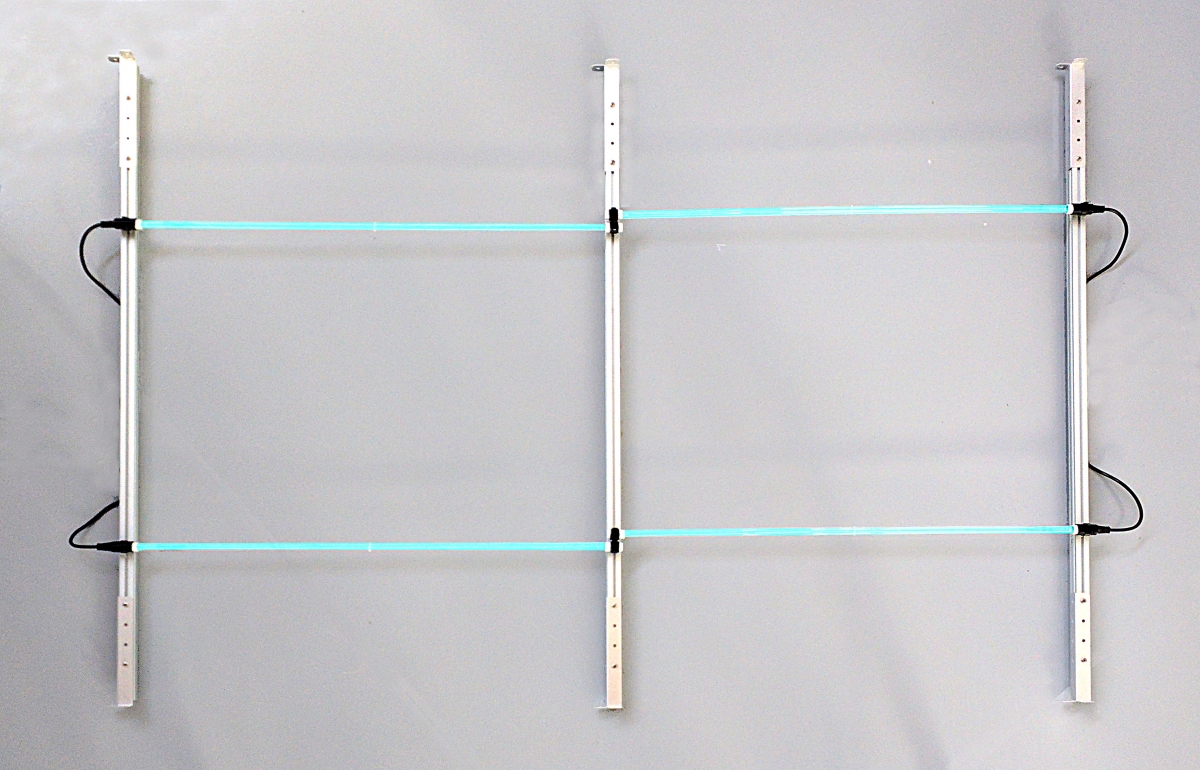
UV-FCU-CL-C is composed of:
- Simple, basic, low-cost system for AHUs
- Increased Disinfection Performance, with High-Output UV-C lamps (253,7 nm).
- 360° irradiation, easy clips to install the lamps included
- Protected IP44, with UVLON™ shatterproof protective sleeve always included to prevent the release of glass fragments in the event of accidental lamp breakage
- Connect to the power supply, 3 different ballast choices to adapt to your installation and monitoring needs
- Choose your installation layout, mounting kits available, to adapt to all sizes and different kind of surface/coil treatment

UV-FCU-CL-C
SEAMLESS UV PROTECTION
For a carefree set up of a UV system, the simplest solution is to use a 360° disinfection device.
UVLON™ “shatterproof” protection sleeve always included to prevent glass fragments from falling in the event of accidental lamp breakage and to protect the lamp from humidity and temperature fluctuations.
Separate power supply available in different options, along with an adjustable mounting kit.
This is UV FCU-CL.


DISCOVER THE PRODUCTS

UV-DUCT-FL-NX
UV-DUCT-FL-NX purifies homogeneously the airflow running through its powerful lamps, eliminating the microbial load and the spreading and distribution of hazardous and annoying pathogens inside buildings.
In AC systems an unpleasant biofilm covers usually all inner surfaces as the result of microorganisms combination and favorable conditions for their proliferation, such as temperature changes, high humidity and darkness. UV-DUCT-FL-NX inhibits the creation of this biofilm increasing Indoor Air Quality and comfort.
More specifically, the use of UV-DUCT-FL-NX eliminates important issues related to AC Systems and deadly illnesses (such as Legionella Pneumophila, Tuberculosis, Flu, etc.) but also “Sick Building Syndrome”, “Monday Fever”, Asthma and Allergies. UV-DUCT-FL-NX allows also the control of Hygiene high standards in Food industry and fights against Healthcare Associated Infections (HAI) in hospitals.
UV-DUCT-FL-NX application is important not only for IAQ and health, but a cleaner AC system is also more efficient from an economic point of view, with less operative and maintenance costs. As a matter of fact, using UVGI the need of filters replacement and clean of inner surfaces is less necessary than usual.
With UV-DUCT-FL-NX you obtain a deep and continuous disinfection and cleaning of your AC system, without the use of expensive and polluting chemicals, , in few words with UV-DUCT-FL-NX you have better comfort for people in the building, saving money.

UV-STICK-SCR / UV-STICK-SCR-UL
Installed within Air Handling Units (AHU), UV-STICK-SCR inhibits the proliferation of viruses, bacteria, molds, and spores, which are highly harmful to health and tend to accumulate within air conditioning systems.
UV-STICK-SCR is the simplest, most flexible, complete, and efficient system to improve air quality, energy consumption, and maintenance costs in HVAC systems.
UV-STICK-AL-SCR is made of aluminum, with a mirror-reflective parabolic reflector.
UV-STICK-AX-SCR is made of aluminum, with a flat, shiny aluminum reflector.
UV-STICK-NX-SCR is made of stainless steel with a shiny aluminum reflector, optional lamp protection grid ("-NT").
The germicidal power of UV-STICK-SCR keeps the surfaces of the air conditioning system clean, preventing the accumulation of contaminants such as bacteria, pathogenic viruses (Legionella, Tuberculosis, Influenza), and volatile organic compounds (VOCs), responsible for issues like Asthma, Allergies, Sick Building Syndrome, Monday Fever, and Healthcare-Associated Infections (HAI).
The application of UV-STICK-SCR improves indoor air quality, reduces AC system operational and maintenance costs, enhances component and filter efficiency, extends part lifespan, and lowers energy consumption and pressure losses, leading to increased comfort.

UV-RACK
UV-RACK purifies homogeneously the airflow running through its powerful lamps, eliminating the microbial load and the spreading and distribution of dangerous and annoying pathogens inside buildings.
in AC systems an unpleasant biofilm covers usually all inner surfaces as the result of microorganisms combination and favorable conditions for their proliferation, such as temperature changes, high humidity and darkness. UV-RACK inhibits the creation of this biofilm increasing Indoor Air Quality and comfort.
More specifically, the use of UV-RACK eliminate important issues related to AC Systems and deadly illnesses (such as Legionella Pneumophila, Tuberculosis, Flu, etc.) but also “Sick Building Syndrome”, “Monday Fever”, Asthma and Allergies. UVRACK allows also the control of Hygiene high standards in Food industry and fights against Healthcare Associated Infections (HAI) in hospitals.
UV-RACK application is important not only for IAQ and health, but a cleaner AC system is also more efficient from an economic point of view, with less operative and maintenance costs. As a matter of fact, using UVGI the need of filters replacement and clean of inner surfaces is less necessary than usual.
With UV-RACK you obtain a deep and continuous disinfection and cleaning of your AC system, without the use of expensive and polluting chemicals, , in few words with UV-RACK you have better comfort for people in the building, saving mone y.

UV-DUCT-SQ / UV-DUCT-SQ-UL
UV-DUCT-SQ is very versatile and its shape has been designed to adapt quickly to different applications; UV-DUCT-SQ is a modular system that can be mounted by itself or combined with other modules side-by-side, overlapping, etc.; it purifies homogeneously the airflow running through its powerful lamps, eliminating the microbial load and the spreading and distribution of dangerous and annoying pathogens inside buildings.
in AC systems an unpleasant biofilm covers usually all inner surfaces as the result of microorganisms combination and favorable conditions for their proliferation, such as temperature changes, high humidity and darkness. UV-DUCT-SQ inhibits the creation of this biofilm increasing Indoor Air Quality and comfort.
More specifically, the use of UV-DUCT-SQ eliminates important issues related to AC Systems such as deadly illnesses (Legionella Pneumophila, Tuberculosis, Flu, etc.) but also “Sick Building Syndrome”, “Monday Fever”, Asthma and Allergies. UV-DUCT-SQ allows also the control of Hygiene high standards in Food industry and fights against Healthcare Associated Infections (HAI) in hospitals.
UV-DUCT-SQ application is important not only for IAQ and health, but a cleaner AC system is also more efficient from an economic point of view, with less operative and maintenance costs.
As a matter of fact, using UVGI the need of filters replacement and clean of inner surfaces is less necessary than usual.
With UV-DUCT-SQ you obtain a deep and continuous disinfection of your AC system, without the use of expensive and polluting chemicals, , in few words with UV-DUCT-SQ you have better comfort for people in the building, saving money.

UV-STYLO-E-C
UV-STYLO-E-C has been designed to sanitize water directly within basins, sinks, washing systems (IP67).
Most of the time inside the tank containing the percolating water, which is used to be sprayed in the evaporative panels, there, are sedimentation of mold and algae, and the interior surfaces are covered with an unpleasant biofilm. The most risky case is that there could be also deadly pathogens such as Legionella Pneumophila, for which there are several hundred deaths cases per year.
This happens because the water sprayed inside AC system spreads airborne diseases inside buildings, through infectious particles breathable in air.
UV-STYLO-E-C avoid also so called “Sick Building Syndrome”, “Monday Fever”, Asthma and Allergies, it allows the control of Hygiene high standards in Food industry and fights against Healthcare Associated Infections (HAI) in hospitals. UV-STYLO-E-C application is important for not only IAQ and health, but a cleaner AC system is also more efficient from an economic point of view, with less operative and maintenance costs. As a matter of fact, using UVGI the need of filters replacement and clean of inner surfaces is less necessary than usual.
With UV-STYLO-E you obtain a deep and continuous disinfection and cleaning of your AC system, without the use of expensive and polluting chemicals, , in few words with UV-STYLO-E you have better comfort for people in the building, saving money.
