


Tempo di lettura: 5 minuti, versione PDF disponibile: DOWNLOAD PDF
In che modo la tecnologia UV-C e il miglioramento della qualità dell’aria indoor aiutano le strutture per anziani a proteggere gli ospiti e a garantire la continuità operativa.
Quando un ospite di una comunità per anziani o di una casa di cura si ammala, sorge subito una domanda per il team assistenziale: quante altre persone potrebbero ammalarsi nei giorni successivi?
Questa incertezza genera preoccupazione tra gli ospiti e le loro famiglie, mette sotto pressione il personale e può far aumentare rapidamente costi e complessità dell’assistenza. Tra monitoraggi clinici più frequenti, misure di controllo delle infezioni, carichi di lavoro elevati, straordinari e maggiori esigenze di pulizia e forniture, la gestione diventa più onerosa.
Per il personale, l’impatto va ben oltre il singolo caso. Quando una malattia respiratoria si diffonde all’interno della struttura, le attività quotidiane possono passare rapidamente da una gestione ordinaria a una situazione emergenziale.
Per questo motivo, la prevenzione delle infezioni e il miglioramento della qualità dell’aria indoor (IAQ) sono sempre più considerati elementi chiave della strategia operativa: contribuiscono a ridurre le malattie evitabili, permettono agli ospiti di restare al sicuro nella propria comunità e aiutano a garantire continuità nell’assistenza, con meno interruzioni.
IAQ COME STRATEGIA OPERATIVA
Fin dagli anni ’40, scuole e ospedali utilizzano l’energia ultravioletta germicida (GUV o UV-C) per ridurre la trasmissione aerea delle malattie infettive, inattivando batteri e virus mentre circolano nell’aria indoor.
Studi storici condotti nelle scuole statunitensi hanno dimostrato che i sistemi UV installati nella parte alta degli ambienti riducevano significativamente la trasmissione del morbillo tra i bambini, disinfettando l’aria dove si accumulano le particelle respiratorie. Questi primi successi in ambito di salute pubblica hanno dimostrato che il controllo delle infezioni aeree può proteggere intere aule senza richiedere interventi comportamentali diretti.
Oggi principi simili vengono applicati in ambito sanitario e nelle strutture residenziali collettive. I team di gestione non devono comprendere la fisica delle lunghezze d’onda UV per cogliere il valore operativo di un’aria più pulita. Ciò che conta è il risultato: ospiti più sani, personale più stabile e meno interruzioni all’interno della comunità.
Le malattie trasmesse per via aerea generano effetti a catena negli ambienti di assistenza. Quando i virus respiratori si diffondono, l’impatto si estende ben oltre il caso iniziale.
Le assenze del personale aumentano. I team assistenziali dedicano più tempo al monitoraggio e ai protocolli di isolamento. Le forniture, come ossigeno, PPE e materiali per i test, vengono consumate più rapidamente. I team clinici subiscono una maggiore pressione e i servizi di routine, dalla ristorazione alle attività ricreative, possono essere interrotti.
I trasferimenti ospedalieri aggiungono un ulteriore livello di complessità. Ogni trasferimento richiede coordinamento con i fornitori sanitari, documentazione, comunicazione con le famiglie e pianificazione dell’assistenza al rientro del ospite.
Gli ospiti che lasciano la struttura per ricevere cure acute possono rientrare in condizioni più fragili, con un bisogno maggiore di assistenza. Le famiglie vivono momenti di stress e incertezza, mentre il personale deve dedicare ulteriore tempo per supportare gli ospiti nel recupero e nel ritorno alla stabilità.
In sintesi, la malattia non colpisce solo i singoli individui, ma incide sul funzionamento complessivo della struttura.
Le strategie di prevenzione delle infezioni aeree, inclusa la disinfezione dell’aria tramite UV germicidi (GUV), affrontano il problema alla radice: l’aria condivisa che ospiti e operatori respirano quotidianamente. Riducendo la concentrazione di patogeni aerodispersi negli spazi comuni e nei sistemi HVAC, queste tecnologie contribuiscono a limitare le condizioni che favoriscono la diffusione delle malattie respiratorie.
Per il personale e i responsabili delle strutture, è importante evidenziare che tali sistemi possono spesso essere implementati con costi relativamente contenuti e prevedibili. In installazioni simili al progetto pilota Cardigan Ridge, il costo totale di proprietà su due anni — comprensivo di apparecchiature, installazione e manutenzione — si attesta mediamente intorno a 1,89 dollari al giorno per unità.
Se confrontato con le interruzioni operative causate da epidemie respiratorie, questo tipo di investimento viene sempre più considerato una componente concreta dell’infrastruttura di prevenzione delle infezioni, piuttosto che un semplice miglioramento opzionale dell’edificio.
Anche riduzioni contenute dell’incidenza delle malattie possono generare benefici operativi rilevanti. Meno infezioni significano:
Per questo motivo, un numero crescente di operatori del settore considera la qualità dell’aria indoor parte integrante dell’infrastruttura di prevenzione, al pari dei protocolli di pulizia, dei programmi vaccinali e del monitoraggio clinico.
Il valore della prevenzione si misura spesso in ciò che non accade: meno interruzioni, meno escalation assistenziali e più giornate in cui gli ospiti possono vivere in modo sicuro, stabile e confortevole all’interno della propria comunità.
TEST SUL CAMPO E VALIDAZIONE UNIVERSITARIA
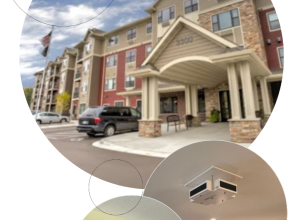
Per valutare se il miglioramento della qualità dell’aria indoor possa contribuire concretamente alla prevenzione delle malattie e alla riduzione delle interruzioni assistenziali, Light Progress ha avviato un progetto pilota presso Cardigan Ridge, una RSA a Minneapolis – Minnesota, USA.
L’iniziativa ha coinvolto i ricercatori della Lyles School of Civil and Construction Engineering della Purdue University, con l’obiettivo di analizzare l’applicazione reale della disinfezione UV germicida in contesti operativi.
Non si trattava semplicemente di testare una tecnologia, ma di rispondere a domande pratiche che i gestori delle RSA si pongono quando ristrutturano gli edifici: è possibile implementare soluzioni per il controllo delle infezioni aeree in modo economicamente sostenibile, senza dover sostituire i sistemi HVAC esistenti? È possibile installarle e validarle in sicurezza, riducendo al minimo i disagi per ospiti e personale? Dove si possono trovare sistemi con evidenze affidabili per decisori ma anche per i progettisti?
Tra questi:
Queste strutture presentavano caratteristiche edilizie e impiantistiche molto simili:
La principale variabile distintiva era l’introduzione della disinfezione UV negli spazi condivisi di Cardigan Ridge.
CONTROLLO DELLE INFEZIONI SENZA SOSTITUIRE GLI IMPIANTI HVAC
Per molti gestori, il principale ostacolo al miglioramento della qualità dell’aria e quindi del controllo delle infezioni è rappresentato dall’investimento iniziale necessario. Nella maggior parte dei casi, infatti, non è sostenibile sostituire completamente i sistemi HVAC esistenti al solo scopo di migliorare il controllo delle infezioni aerodisperse.
Nel caso di Cardigan Ridge, l’infrastruttura HVAC è rimasta invariata. Il progetto ha invece introdotto la disinfezione UV come ulteriore livello di purificazione dell’aria, in linea con il framework prestazionale definito dallo standard ASHRAE 241: Control of Infectious Aerosols.
Piuttosto che prescrivere una tecnologia specifica, lo standard ASHRAE 241 definisce la quantità di aria pulita equivalente (Equivalent Clean Air, ECA) necessaria per ridurre il rischio di infezione aerea. Questa “aria pulita” può essere ottenuta attraverso un miglioramento della ventilazione, una filtrazione più efficiente oppure mediante tecnologie di disinfezione come gli UV germicidi.
Questo approccio offre alle strutture una maggiore flessibilità, consentendo di raggiungere gli obiettivi di riduzione del rischio senza dover necessariamente intervenire sull’intero sistema HVAC.
IMPLEMENTAZIONE MIRATA NEGLI SPAZI CONDIVISI
Nel settembre 2024, il partner per l’installazione R&K Electric ha installato i sistemi UV presso la struttura Cardigan Ridge, composta da 118 unità abitative.
La strategia di controllo della diffusione delle malattie si è concentrata negli ambienti condivisi, dove il rischio di trasmissione è generalmente più elevato. Sono state installate 11 unità “Upper Room” GUV negli ambienti comuni, tra cui:
Il posizionamento, la messa in servizio e la validazione della sicurezza sono stati eseguiti seguendo i protocolli di installazione e certificazione GUV riconosciuti a livello internazionale da “NALMCO”. Questo approccio strutturato consente agli ingegneri di individuare le configurazioni ottimali e di garantire un funzionamento sicuro anche in ambienti occupati.
Concentrando la capacità di disinfezione nei punti a maggior rischio di esposizione, le strutture possono aumentare in modo significativo l’apporto di aria pulita, contenendo al tempo stesso costi e impatti operativi.
DIFFERENZE OSSERVATE NELL’INCIDENZA DELLE MALATTIE
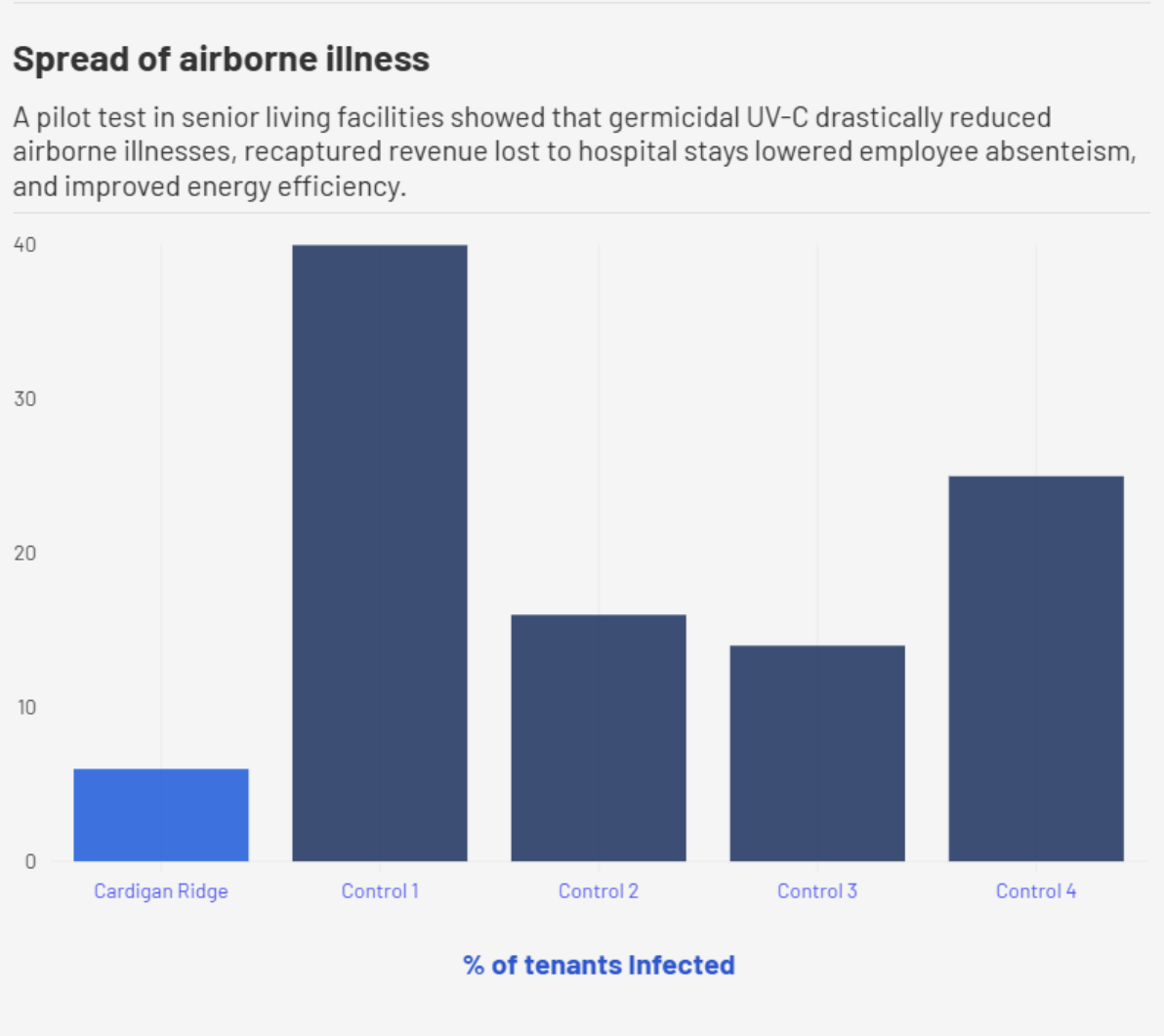
La Tabella 1 evidenzia una riduzione dell’80% dei casi di malattia.
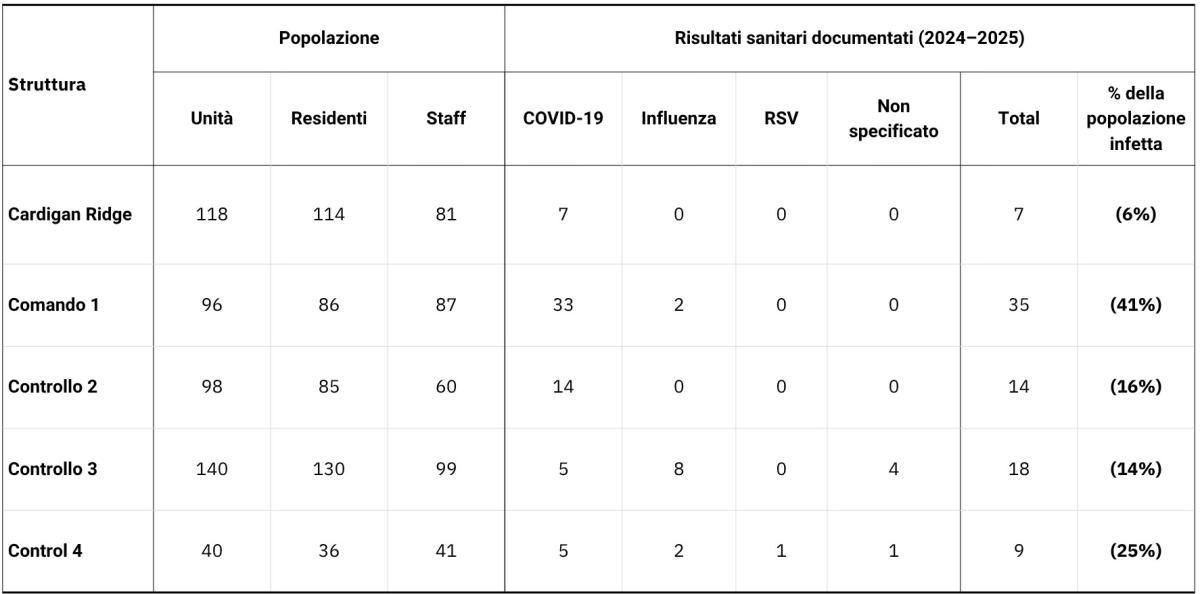
Durante il periodo di osservazione, Cardigan Ridge ha registrato sette casi documentati di malattie infettive tra gli ospiti. Nelle quattro strutture di confronto, i casi variavano invece da nove a trentacinque, a seconda della struttura.
È interessante notare che una comunità più piccola, con soli 36 ospiti, ha registrato nove casi (il 25%), a dimostrazione di quanto rapidamente le malattie respiratorie possano diffondersi negli ambienti di comunità.
Come illustrato nella tabella a pagina 4, la riduzione osservata dell’incidenza delle malattie è stata pari all’80%. Sebbene il campione non sia sufficientemente ampio per trarre conclusioni cliniche definitive, il confronto suggerisce che strategie mirate di controllo delle infezioni aerodisperse possano contribuire a ridurre il rischio di trasmissione negli spazi condivisi.
CONCLUSIONE
Il progetto pilota di Cardigan Ridge dimostra come il controllo delle infezioni aerodisperse possa essere integrato efficacemente nelle comunità per anziani esistenti, senza la necessità di sostituire l’infrastruttura dell’impianto di ventilazione.
Durante il periodo di osservazione, l’incidenza delle malattie nella struttura è risultata inferiore rispetto a quella di altre comunità comparabili. Sebbene siano necessari studi più estesi per confermare l’impatto nel lungo periodo, i risultati supportano l’ipotesi che sistemi di disinfezione dell’aria UV ben progettati possano contribuire a ridurre il rischio di infezione negli ambienti indoor.
Per i gestori, le implicazioni pratiche sono evidenti: prevenire la malattia ha un valore operativo concreto.
Quando le infezioni si diffondono in una comunità, le conseguenze vanno oltre la salute degli ospiti, includendo carenze di personale, aumento dell’intensità assistenziale e possibili trasferimenti ospedalieri. Ridurre la trasmissione — anche in modo non drastico — può contribuire a stabilizzare il personale, limitare le escalation assistenziali e permettere a un maggior numero di ospiti di rimanere in sicurezza all’interno della struttura.
In questo contesto, gli interventi mirati sulla qualità dell’aria indoor si configurano come una vera e propria infrastruttura a supporto della continuità assistenziale: favoriscono ospiti più sani, operazioni più stabili e una gestione più prevedibile delle risorse, senza richiedere interventi strutturali invasivi.
In che modo la tecnologia UV-C e il miglioramento della qualità dell’aria indoor aiutano le strutture per anziani a proteggere gli ospiti e a garantire la continuità operativa.
Quando un ospite di una comunità per anziani o di una casa di cura si ammala, sorge subito una domanda per il team assistenziale: quante altre persone potrebbero ammalarsi nei giorni successivi?
Questa incertezza genera preoccupazione tra gli ospiti e le loro famiglie, mette sotto pressione il personale e può far aumentare rapidamente costi e complessità dell’assistenza. Tra monitoraggi clinici più frequenti, misure di controllo delle infezioni, carichi di lavoro elevati, straordinari e maggiori esigenze di pulizia e forniture, la gestione diventa più onerosa.
Per il personale, l’impatto va ben oltre il singolo caso. Quando una malattia respiratoria si diffonde all’interno della struttura, le attività quotidiane possono passare rapidamente da una gestione ordinaria a una situazione emergenziale.
Per questo motivo, la prevenzione delle infezioni e il miglioramento della qualità dell’aria indoor (IAQ) sono sempre più considerati elementi chiave della strategia operativa: contribuiscono a ridurre le malattie evitabili, permettono agli ospiti di restare al sicuro nella propria comunità e aiutano a garantire continuità nell’assistenza, con meno interruzioni.
IAQ COME STRATEGIA OPERATIVA
Fin dagli anni ’40, scuole e ospedali utilizzano l’energia ultravioletta germicida (GUV o UV-C) per ridurre la trasmissione aerea delle malattie infettive, inattivando batteri e virus mentre circolano nell’aria indoor.
Studi storici condotti nelle scuole statunitensi hanno dimostrato che i sistemi UV installati nella parte alta degli ambienti riducevano significativamente la trasmissione del morbillo tra i bambini, disinfettando l’aria dove si accumulano le particelle respiratorie. Questi primi successi in ambito di salute pubblica hanno dimostrato che il controllo delle infezioni aeree può proteggere intere aule senza richiedere interventi comportamentali diretti.
Oggi principi simili vengono applicati in ambito sanitario e nelle strutture residenziali collettive. I team di gestione non devono comprendere la fisica delle lunghezze d’onda UV per cogliere il valore operativo di un’aria più pulita. Ciò che conta è il risultato: ospiti più sani, personale più stabile e meno interruzioni all’interno della comunità.
Le malattie trasmesse per via aerea generano effetti a catena negli ambienti di assistenza. Quando i virus respiratori si diffondono, l’impatto si estende ben oltre il caso iniziale.
Le assenze del personale aumentano. I team assistenziali dedicano più tempo al monitoraggio e ai protocolli di isolamento. Le forniture, come ossigeno, PPE e materiali per i test, vengono consumate più rapidamente. I team clinici subiscono una maggiore pressione e i servizi di routine, dalla ristorazione alle attività ricreative, possono essere interrotti.
I trasferimenti ospedalieri aggiungono un ulteriore livello di complessità. Ogni trasferimento richiede coordinamento con i fornitori sanitari, documentazione, comunicazione con le famiglie e pianificazione dell’assistenza al rientro del ospite.
Gli ospiti che lasciano la struttura per ricevere cure acute possono rientrare in condizioni più fragili, con un bisogno maggiore di assistenza. Le famiglie vivono momenti di stress e incertezza, mentre il personale deve dedicare ulteriore tempo per supportare gli ospiti nel recupero e nel ritorno alla stabilità.
In sintesi, la malattia non colpisce solo i singoli individui, ma incide sul funzionamento complessivo della struttura.
Le strategie di prevenzione delle infezioni aeree, inclusa la disinfezione dell’aria tramite UV germicidi (GUV), affrontano il problema alla radice: l’aria condivisa che ospiti e operatori respirano quotidianamente. Riducendo la concentrazione di patogeni aerodispersi negli spazi comuni e nei sistemi HVAC, queste tecnologie contribuiscono a limitare le condizioni che favoriscono la diffusione delle malattie respiratorie.
Per il personale e i responsabili delle strutture, è importante evidenziare che tali sistemi possono spesso essere implementati con costi relativamente contenuti e prevedibili. In installazioni simili al progetto pilota Cardigan Ridge, il costo totale di proprietà su due anni — comprensivo di apparecchiature, installazione e manutenzione — si attesta mediamente intorno a 1,89 dollari al giorno per unità.
Se confrontato con le interruzioni operative causate da epidemie respiratorie, questo tipo di investimento viene sempre più considerato una componente concreta dell’infrastruttura di prevenzione delle infezioni, piuttosto che un semplice miglioramento opzionale dell’edificio.
Anche riduzioni contenute dell’incidenza delle malattie possono generare benefici operativi rilevanti. Meno infezioni significano:
- minori assenze del personale,
- meno interventi clinici urgenti,
- meno ricoveri ospedalieri,
- maggiore continuità nelle routine quotidiane degli ospiti.
Per questo motivo, un numero crescente di operatori del settore considera la qualità dell’aria indoor parte integrante dell’infrastruttura di prevenzione, al pari dei protocolli di pulizia, dei programmi vaccinali e del monitoraggio clinico.
Il valore della prevenzione si misura spesso in ciò che non accade: meno interruzioni, meno escalation assistenziali e più giornate in cui gli ospiti possono vivere in modo sicuro, stabile e confortevole all’interno della propria comunità.
TEST SUL CAMPO E VALIDAZIONE UNIVERSITARIA
Per valutare se il miglioramento della qualità dell’aria indoor possa contribuire concretamente alla prevenzione delle malattie e alla riduzione delle interruzioni assistenziali, Light Progress ha avviato un progetto pilota presso Cardigan Ridge, una RSA a Minneapolis – Minnesota, USA.
L’iniziativa ha coinvolto i ricercatori della Lyles School of Civil and Construction Engineering della Purdue University, con l’obiettivo di analizzare l’applicazione reale della disinfezione UV germicida in contesti operativi.
Non si trattava semplicemente di testare una tecnologia, ma di rispondere a domande pratiche che i gestori delle RSA si pongono quando ristrutturano gli edifici: è possibile implementare soluzioni per il controllo delle infezioni aeree in modo economicamente sostenibile, senza dover sostituire i sistemi HVAC esistenti? È possibile installarle e validarle in sicurezza, riducendo al minimo i disagi per ospiti e personale? Dove si possono trovare sistemi con evidenze affidabili per decisori ma anche per i progettisti?
“Quando i sistemi GUV chiamati “upper air” sono progettati e implementati correttamente, migliorano la qualità dell’aria indoor e contribuiscono a ridurre la trasmissione delle malattie, con un impatto energetico minimo”, ha dichiarato Santi. “In molti edifici rappresentano una soluzione più pratica rispetto all’aumento significativo della ventilazione o al potenziamento della filtrazione, che possono comportare criticità in termini di consumo energetico e comfort.”
Per ottenere evidenze concrete, i ricercatori hanno monitorato diversi indicatori ambientali e operativi all’interno degli ambienti indoor.Tra questi:
- i livelli di CO₂, utilizzati come indicatore della ventilazione,
- i dati di funzionamento dei termostati e dei sistemi HVAC,
- i principali parametri della qualità dell’aria indoor (IAQ),
- l’incidenza delle infezioni tra ospiti e personale.
Queste strutture presentavano caratteristiche edilizie e impiantistiche molto simili:
- stanze dotate di unità autonome per il riscaldamento e il raffrescamento,
- spazi comuni serviti da ventilazione centralizzata,
- circa il 25% di aria esterna,
- filtrazione MERV-9,
- ventilazione continua.
La principale variabile distintiva era l’introduzione della disinfezione UV negli spazi condivisi di Cardigan Ridge.
CONTROLLO DELLE INFEZIONI SENZA SOSTITUIRE GLI IMPIANTI HVAC
Per molti gestori, il principale ostacolo al miglioramento della qualità dell’aria e quindi del controllo delle infezioni è rappresentato dall’investimento iniziale necessario. Nella maggior parte dei casi, infatti, non è sostenibile sostituire completamente i sistemi HVAC esistenti al solo scopo di migliorare il controllo delle infezioni aerodisperse.
Nel caso di Cardigan Ridge, l’infrastruttura HVAC è rimasta invariata. Il progetto ha invece introdotto la disinfezione UV come ulteriore livello di purificazione dell’aria, in linea con il framework prestazionale definito dallo standard ASHRAE 241: Control of Infectious Aerosols.
Piuttosto che prescrivere una tecnologia specifica, lo standard ASHRAE 241 definisce la quantità di aria pulita equivalente (Equivalent Clean Air, ECA) necessaria per ridurre il rischio di infezione aerea. Questa “aria pulita” può essere ottenuta attraverso un miglioramento della ventilazione, una filtrazione più efficiente oppure mediante tecnologie di disinfezione come gli UV germicidi.
Questo approccio offre alle strutture una maggiore flessibilità, consentendo di raggiungere gli obiettivi di riduzione del rischio senza dover necessariamente intervenire sull’intero sistema HVAC.
IMPLEMENTAZIONE MIRATA NEGLI SPAZI CONDIVISI
Nel settembre 2024, il partner per l’installazione R&K Electric ha installato i sistemi UV presso la struttura Cardigan Ridge, composta da 118 unità abitative.
La strategia di controllo della diffusione delle malattie si è concentrata negli ambienti condivisi, dove il rischio di trasmissione è generalmente più elevato. Sono state installate 11 unità “Upper Room” GUV negli ambienti comuni, tra cui:
- aree di ristorazione,
- spazi biblioteca,
- palestra,
- ambienti ricreativi e di aggregazione.
Il posizionamento, la messa in servizio e la validazione della sicurezza sono stati eseguiti seguendo i protocolli di installazione e certificazione GUV riconosciuti a livello internazionale da “NALMCO”. Questo approccio strutturato consente agli ingegneri di individuare le configurazioni ottimali e di garantire un funzionamento sicuro anche in ambienti occupati.
Concentrando la capacità di disinfezione nei punti a maggior rischio di esposizione, le strutture possono aumentare in modo significativo l’apporto di aria pulita, contenendo al tempo stesso costi e impatti operativi.
DIFFERENZE OSSERVATE NELL’INCIDENZA DELLE MALATTIE
La Tabella 1 evidenzia una riduzione dell’80% dei casi di malattia.
Durante il periodo di osservazione, Cardigan Ridge ha registrato sette casi documentati di malattie infettive tra gli ospiti. Nelle quattro strutture di confronto, i casi variavano invece da nove a trentacinque, a seconda della struttura.
È interessante notare che una comunità più piccola, con soli 36 ospiti, ha registrato nove casi (il 25%), a dimostrazione di quanto rapidamente le malattie respiratorie possano diffondersi negli ambienti di comunità.
Come illustrato nella tabella a pagina 4, la riduzione osservata dell’incidenza delle malattie è stata pari all’80%. Sebbene il campione non sia sufficientemente ampio per trarre conclusioni cliniche definitive, il confronto suggerisce che strategie mirate di controllo delle infezioni aerodisperse possano contribuire a ridurre il rischio di trasmissione negli spazi condivisi.
CONCLUSIONE
Il progetto pilota di Cardigan Ridge dimostra come il controllo delle infezioni aerodisperse possa essere integrato efficacemente nelle comunità per anziani esistenti, senza la necessità di sostituire l’infrastruttura dell’impianto di ventilazione.
Durante il periodo di osservazione, l’incidenza delle malattie nella struttura è risultata inferiore rispetto a quella di altre comunità comparabili. Sebbene siano necessari studi più estesi per confermare l’impatto nel lungo periodo, i risultati supportano l’ipotesi che sistemi di disinfezione dell’aria UV ben progettati possano contribuire a ridurre il rischio di infezione negli ambienti indoor.
Per i gestori, le implicazioni pratiche sono evidenti: prevenire la malattia ha un valore operativo concreto.
Quando le infezioni si diffondono in una comunità, le conseguenze vanno oltre la salute degli ospiti, includendo carenze di personale, aumento dell’intensità assistenziale e possibili trasferimenti ospedalieri. Ridurre la trasmissione — anche in modo non drastico — può contribuire a stabilizzare il personale, limitare le escalation assistenziali e permettere a un maggior numero di ospiti di rimanere in sicurezza all’interno della struttura.
In questo contesto, gli interventi mirati sulla qualità dell’aria indoor si configurano come una vera e propria infrastruttura a supporto della continuità assistenziale: favoriscono ospiti più sani, operazioni più stabili e una gestione più prevedibile delle risorse, senza richiedere interventi strutturali invasivi.